
Portfolio
Ilaya
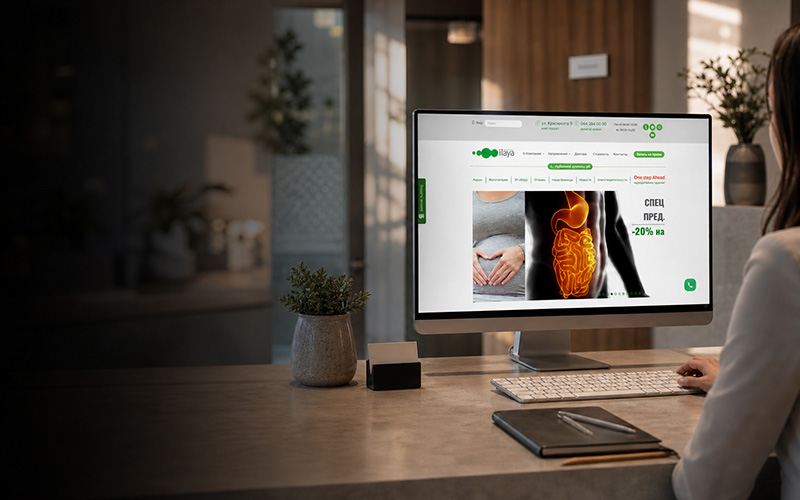
Historical digital work for Ilaya, presenting reproductive medicine, multidisciplinary care and cell-technology expertise through a clear and trustworthy medical website.
Overview
Ilaya is a Ukrainian medical company known for reproductive medicine, gynecology, urology and work involving cell technologies. Its broader service offering has also included family medicine, specialist consultations and diagnostic directions.
DigitalTouch contributed to Ilaya’s historical public website and digital presence. The engagement addressed a demanding communication problem: presenting specialized medical expertise in a form that patients could understand, navigate and trust.
Designing for sensitive healthcare decisions
People researching fertility treatment, reproductive health or complex medical procedures are rarely casual visitors. They may arrive with uncertainty, previous treatment experience or questions that are difficult to reduce to a simple service label.
The website therefore needed to provide clarity without sounding impersonal or aggressively promotional. It had to introduce available directions, explain what a program involved and help a visitor determine the appropriate next step while preserving the role of a qualified medical consultation.
A useful patient journey connects several layers of information:
- the medical direction or concern;
- relevant services and treatment programs;
- the specialists working in that area;
- preparation and patient information;
- clinic credentials and facilities;
- a clear route to consultation or contact.
Structuring these elements around the patient’s questions makes a complex medical organization easier to approach.
Organizing multidisciplinary expertise
Ilaya’s proposition extended beyond a single specialty. Reproductive medicine intersected with gynecology, urology, endocrinology, diagnostics and laboratory work, while the company also communicated expertise in cell technologies and research.
That breadth creates a risk of fragmentation. If every department is presented as a separate island, a patient may struggle to understand how specialists and services relate to one another.
The digital experience required a clear information architecture that could preserve the depth of individual directions while keeping them inside one coherent Ilaya brand. Consistent service templates and navigation patterns helped users move between related topics without restarting their research on every page.
Explaining complex medicine responsibly
Advanced reproductive and cell-based technologies require careful communication. Simplifying terminology can make information more accessible, but oversimplification can turn nuanced medicine into an unrealistic promise.
The website needed to distinguish educational content, descriptions of available services and the clinic’s own medical statements from individualized clinical advice. Good medical UX helps a visitor understand what questions to ask and which specialist to contact; it does not attempt to diagnose them through marketing copy.
This boundary is particularly important for services involving fertility, biological materials or experimental-sounding terminology. Clear language, source context and restrained calls to action contribute directly to credibility.
Doctors as part of the decision journey
For many patients, choosing a clinic also means choosing a doctor. Professional profiles provide a human connection to the organization and help visitors understand a specialist’s direction, qualifications and experience before requesting an appointment.
The website needed to connect doctor information with relevant medical services rather than treating the team page as an isolated directory. This makes it easier to move naturally from learning about a condition or program to identifying an appropriate professional.
Consistent profile presentation also supports trust. Qualifications, specialization and role should be easy to scan without forcing patients to decode inconsistent biographies.
Balancing science with a human experience
Medical technology can demonstrate expertise, but patients ultimately experience care through conversations, decisions and personal outcomes. The visual and content system therefore needed to balance scientific seriousness with an approachable human tone.
Clinical information, facilities, technology, doctors and patient-oriented content each play a different role. Together they establish that Ilaya is both a medical organization with specialist capabilities and a place where an individual can begin a personal care journey.
The design supported that balance through legible typography, consistent page hierarchy, considered use of imagery and visible contact pathways.
Supporting multilingual and international audiences
Specialized Ukrainian clinics may serve both local patients and people researching treatment from other regions or countries. A medical website must remain understandable across language versions and preserve the same information architecture when text length and terminology change.
Reusable layouts make this possible without allowing one language version to become structurally weaker than another. Contact information, service explanations and specialist profiles need to remain consistent so that different audiences receive an equivalent view of the clinic.
A maintainable medical content platform
The historical implementation used WordPress with PHP and MySQL. This gave the public website a practical publishing foundation for service pages, doctor information, patient materials and company updates.
Apache formed part of the recorded hosting environment, while HTML, CSS, JavaScript and jQuery supported the presentation layer. SendGrid was included in the historical technology record for website communication.
For a multidisciplinary clinic, maintainability is essential. Specialists, programs and patient information evolve, so content teams need structured templates rather than a collection of pages that can only be changed by rebuilding the interface.
Responsive access to essential information
Patients often research a clinic or look up contact information on a phone. Important content therefore needed to remain accessible on smaller screens, including service navigation, specialist details, appointment actions, address and telephone information.
Responsive behavior also helps reduce cognitive load. On mobile, long medical pages require especially clear headings, readable spacing and well-positioned next steps so that a visitor can pause and return without losing their place.
DigitalTouch’s confirmed role
DigitalTouch’s historical portfolio confirms public website and digital presence work for Ilaya. The engagement covered the web experience used to organize and present the medical company’s directions, specialists and patient-facing information.
The available record does not establish that DigitalTouch developed Ilaya’s electronic medical records, appointment-management infrastructure, laboratory systems, research technology, cryobank software or the current version of its patient account. These areas are intentionally not claimed.
This case focuses on the verified contribution: turning a complex medical organization into a structured, responsive and credible public digital experience.
Ilaya today
Ilaya’s current website presents reproductive medicine, gynecology, urology, cell therapy and related diagnostic and clinical directions. The company’s present structure, services and medical claims may have evolved since DigitalTouch’s historical engagement.
The current website is linked for brand and organizational context, not as a claim that DigitalTouch built every feature now available.
Visit the current Ilaya website
The challenge
Ilaya needed to explain a broad and technically complex range of medical services to patients making sensitive healthcare decisions. The website had to connect clinical directions, treatment programs, doctors and appointment pathways while communicating expertise without overwhelming or pressuring the visitor.
What DigitalTouch built
DigitalTouch delivered historical public website work for Ilaya, including the content structure and web presentation surrounding medical directions, service programs, specialists and patient information. The available record confirms the public web engagement, not development of Ilaya’s clinical, laboratory or patient-management systems.
Technical approach
The recorded implementation used WordPress on a PHP/MySQL foundation with Apache. HTML, CSS, JavaScript and jQuery supported the public-facing interface, while SendGrid formed part of the recorded communication stack. These technologies describe the website rather than any medical or laboratory infrastructure.
DigitalTouch’s role
Historical website and digital presence delivery for Ilaya
Technologies
- PHP
- MySQL
- WordPress
- Apache
- HTML
- CSS
- JavaScript
- jQuery
- SendGrid
Outcome
The project provided Ilaya with a structured digital presence capable of communicating specialist services and guiding prospective patients toward the appropriate information and contact path. No unverified clinical, patient or commercial outcomes are attributed to DigitalTouch.